
Overview:
This guide moves beyond generic marketing advice to focus specifically on the complex, long-term sales cycles of the industrial sector. We challenge the common misconception that email is “dead” or “annoying” for engineers, demonstrating instead how it is the primary channel for professional documentation and decision-making.
In this guide, you will learn:
The Strategy: Why industrial email marketing is about “staying power” rather than impulse buying.
The Content: The exact 3 frameworks for emails that procurement managers actually value (Relationship, Technical, and Reactivation).
The Execution: How to build a legal, high-quality contact list without buying data.
The Compliance: Technical steps to ensure your emails bypass strict corporate firewalls and avoid the spam folder.
The Checklist: A downloadable 10-point quality check to ensure your emails are professional and effective.
If you are looking to turn your contact database into a consistent source of RFQs without damaging your brand’s reputation, this framework is designed for you.
Email Marketing:
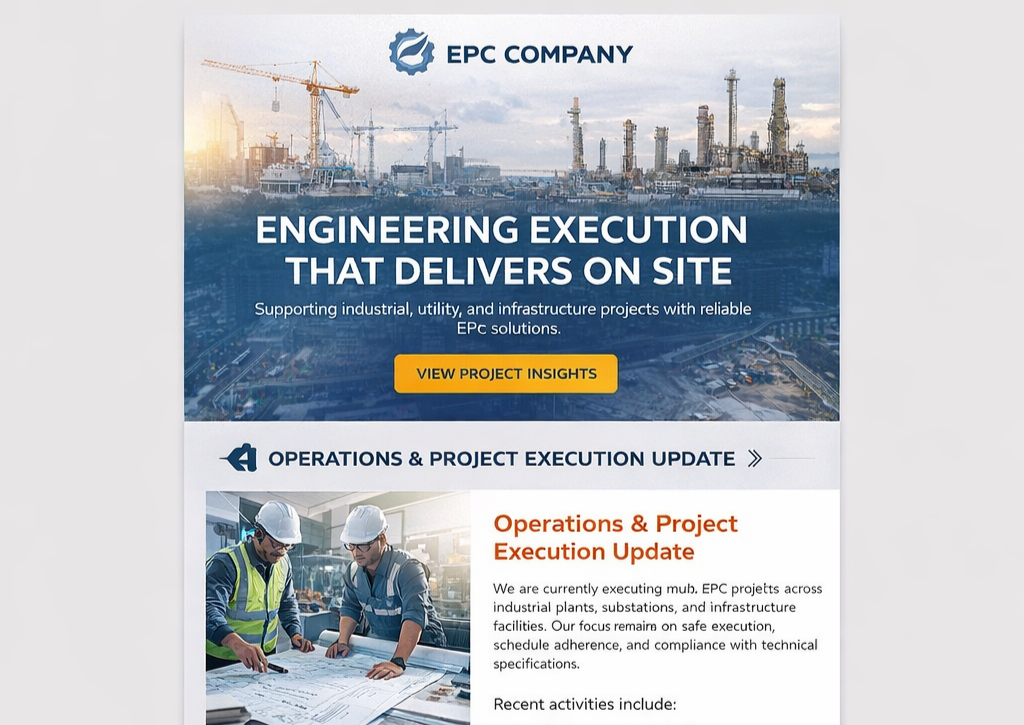
Email marketing is often underestimated in industrial businesses. Many manufacturing companies, EPC contractors, and engineering service providers believe email is outdated or ineffective. Yet, in reality, email remains one of the most reliable communication channels for reaching engineers, maintenance teams, and procurement managers.
In industrial sales, decisions are not made impulsively. They are reviewed, documented, forwarded internally, and discussed over time—and email fits naturally into this process. This guide explains how industrial companies should use email marketing in a practical, non-spammy, and technical way that actually generates enquiries.
Why Email Marketing Still Works for Industrial Companies
Unlike consumer marketing, industrial buyers do not make instant decisions. They rarely click ads for complex services and prefer written communication they can review later.
Engineers and procurement teams rely heavily on email because it allows them to:
Read during downtime: They often review emails during site breaks or while waiting for approvals.
Forward information: Technical specs need to be shared with maintenance managers and safety officers.
Maintain records: Email serves as a “paper trail” for audits and future reference.
Compare vendors calmly: It allows them to assess technical capabilities without the pressure of a cold call.
Email is not about pushing offers. It is about staying visible and technically relevant.
How Industrial Email Marketing Is Different from Typical Marketing Emails
| Aspect | Industrial Email Marketing | Typical Marketing Emails |
|---|---|---|
| Buying Timeline | Decisions take months and involve detailed evaluation | Decisions are made quickly, often instantly |
| Stakeholders | Multiple teams involved (engineering, procurement, management) | Usually a single decision maker |
| Primary Focus | Technical credibility and clarity | Branding and emotional appeal |
| Email Purpose | Educate and inform | Promote and drive immediate action |
| Writing Style | Factual, professional, reference-oriented | Persuasive, promotional |
| Design Approach | Simple, clean, text-focused | Visually rich, design-heavy |
| Tone | Neutral and trustworthy | Energetic and sales-driven |
| Call to Action | Soft and informational (request details, view specs) | Strong and urgent (buy now, sign up) |
| Performance Driver | Trust built over time | Urgency and offers |
Phase 1: Building a Clean Industrial Email List
Before you send a single email, you need a high-quality list. Buying lists is often a waste of money in the industrial sector because decision-makers move companies frequently.
How to build your list legally and effectively:
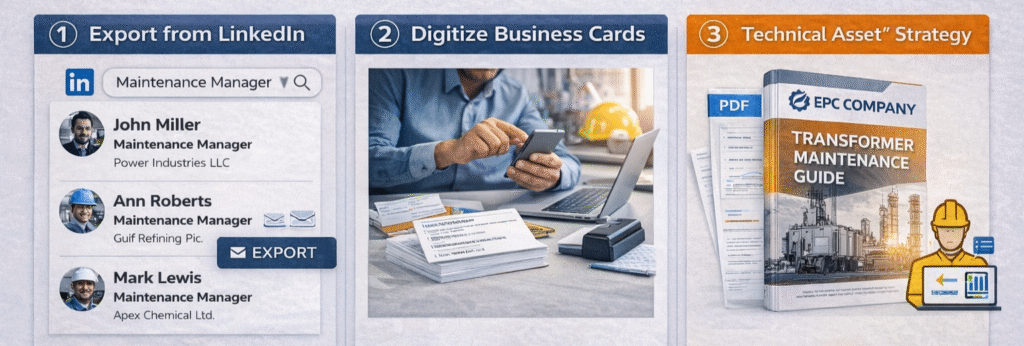
Export from LinkedIn: Use compliant tools to find the specific email addresses of “Maintenance Managers” or “Procurement Officers” you are already connected with.
Digitize Business Cards: Every salesperson in your company has a stack of business cards from exhibitions (like ADIPEC or Middle East Energy). Consolidate these into one digital database.
The “Technical Asset” Strategy: Create a simple PDF checklist (e.g., “Transformer Maintenance Guide”) and offer it on your website in exchange for an email address. Engineers are happy to trade their email for valuable data.
Phase 2: The 3 Types of Emails You Should Send
Most industrial companies fail because they either send no emails or only “Buy Now” sales emails. A balanced strategy requires three distinct types of content.
1. Relationship Emails (Trust-Building Emails)

Purpose: Stay visible without selling.
These emails contain no pricing or promotions. They are strictly about showing presence and credibility. They build familiarity and keep your company in the reader’s mind, making you a trusted source of information.
Examples:
“Common issues we noticed in hydraulic systems this quarter.”
“A short update on new ISO safety standards.”
“Lessons learned from a recent site project (client name redacted).”
Why they work: They act like a “virtual coffee.” Procurement managers see these as market intelligence rather than spam.
2. Technical Value Emails (Engineer-Focused Emails)
Purpose: Demonstrate competence and technical understanding.
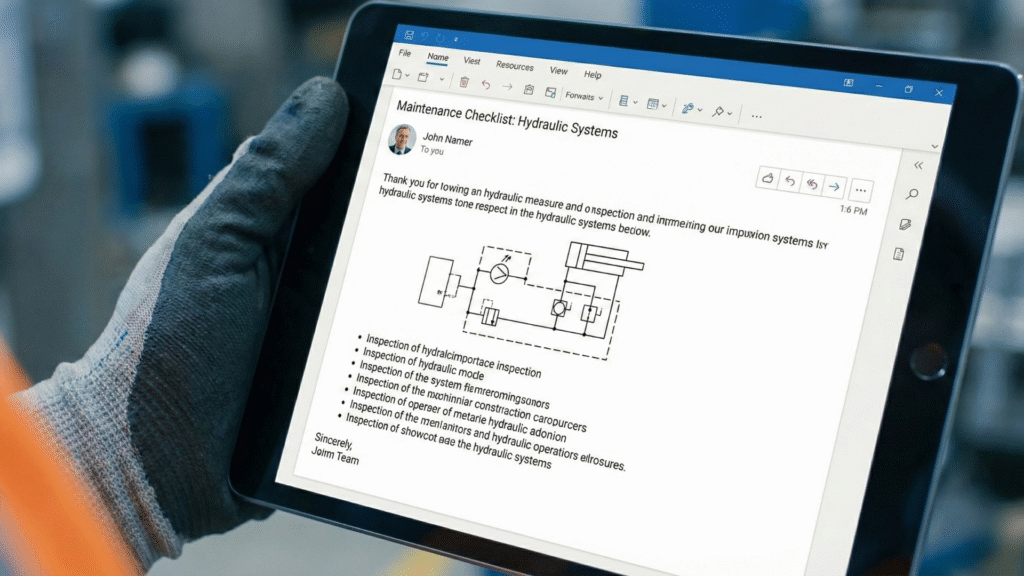
Technical value emails demonstrate your company’s technical understanding and experience. These emails focus on one technical topic at a time and explain it clearly and simply.
Common examples include:
Common mistakes during transformer testing
Repeated MV switchgear failures and their causes
Checks required before commissioning
These emails are often saved or forwarded internally, which makes them extremely powerful in long sales cycles.
3. Reactivation Emails (Silent Lead Emails)

Purpose: Re-engage old enquiries and inactive contacts.
Almost every industrial company has old enquiries, exhibition contacts, or RFQs that went silent. Reactivation emails help reopen these conversations politely.
These emails are:
Short and respectful
Free from pressure or urgency
Focused on restarting dialogue
Subject lines like “Quick follow-up on this” or “Regarding earlier discussion” work well because they feel natural and professional.
Phase 3: Technical Execution & Compliance
Industrial companies often have strict corporate firewalls. If you send emails incorrectly, you will be blocked before you even reach the inbox.
How to avoid the Spam Folder:
Stop using Outlook BCC: Sending bulk emails from your personal Outlook can get your company domain blacklisted. Use professional tools like HubSpot, Brevo, or Mailchimp.
Avoid “Trigger Words”: Corporate firewalls block subject lines containing words like “Free,” “Discount,” “Best Price,” or “Urgent.”
Keep it Text-Based: Heavy images or HTML templates often get blocked by industrial servers. Plain text emails look more personal and have higher deliverability rates.

Phase 4: Measuring Success (Metrics that Matter)
In B2B industrial marketing, standard marketing metrics can be misleading.
What to look for:
Ignore Low Click Rates: Engineers rarely “click” buttons. They read the info and file it away.
Focus on Reply Rate: The gold standard of industrial email marketing is a reply. Even a reply saying “Not now, contact us in Q4” is a success.
Watch the “Forward” Rate: If your email tool tracks forwards, this is a huge signal. It means an engineer has sent your specs to a procurement manager.
Recommended Frequency: You do not need to spam people.
Minimum: 1 email per month.
Ideal: 2 emails per month.
Rule: Consistency matters more than volume.
Download: The Industrial Email Marketing Checklist
Do not send your next campaign without running a quality check. We have compiled a 10-point checklist specifically for manufacturing, engineering, and industrial service companies.
[LINK: CLICK HERE TO DOWNLOAD THE PDF CHECKLIST]
Final Thoughts
Email marketing for industrial companies is not about “campaigns.” It is about structured, professional communication.
When done correctly, it helps you stay visible with procurement teams, build trust with engineers, and naturally support long sales cycles. If your company already has a contact database, email marketing is one of the highest-ROI activities you can start today.
About Nucleus Nest Nucleus Nest works with manufacturing, engineering, and industrial service companies to build structured, technical, and respectful digital communication strategies that improve visibility, generate qualified B2B leads, and support long sales cycles. Our approach is designed around how engineers, maintenance teams, and procurement managers actually evaluate vendors—focusing on clarity, technical relevance, and consistency rather than aggressive marketing.
Contact Us:
seema@nucleusnest.com
+966 505 73 2520